Ranthambore National Park, located in the heart of Rajasthan, is among the most renowned wildlife destinations in India. While most tiger reserves close during the monsoon, Ranthambore offers partial monsoon safari opportunities, making it one of the few places in India where wildlife enthusiasts can experience the thrill of a jungle safari during the rainy season. If you’re looking for India’s top national park to explore during the rainy season, Ranthambore Tiger Reserve offers a captivating mix of vibrant monsoon landscapes and lively wildlife activity, and accessible safari zones.
While the dry season is often considered the peak period for tiger sightings in Ranthambore, the monsoon transforms the park into a vibrant green wilderness, filled with seasonal waterfalls, rejuvenated rivers, and abundant birdlife. For photographers, nature lovers, and adventure travellers, a monsoon wildlife safari in Ranthambore offers a once-in-a-year experience that differs entirely from the dry season.
What Happens to Ranthambore Safari Zones During Monsoon (July–September)?
The monsoon season in Ranthambore National Park typically begins in early July and continues until the end of September. During this time, the park receives most of its annual rainfall, transforming its dry deciduous forests into lush green landscapes. The park’s ecosystem thrives during this period, with waterholes replenished, streams flowing, and flora sprouting in abundance.
However, with this natural rejuvenation comes operational challenges. Safari tracks in the core zones (Zones 1–5) become slippery and sometimes unsafe due to mud and erosion. Roads can get washed out, and certain areas become inaccessible for vehicles. To maintain visitor safety and protect wildlife, the Rajasthan Forest Department temporarily closes core safari zones during the monsoon. These closed zones include Zones 1, 2, 3, 4, and 5. These areas are known as the prime tiger sighting zones during the dry season, but the forest administration prioritises safety and ecological balance over tourism in the rainy months.
Closed Safari Zones During Monsoon:
- Zones 1, 2, 3, 4, and 5 remain closed from July through September.
- These zones typically host high tiger activity and are forest-dense, making monsoon travel risky.
- The closure ensures minimal human disturbance during the sensitive breeding and cub-rearing season for tigers and other wildlife.
Although many visitors are disappointed that the core zones are closed, this restriction supports tiger conservation efforts, reduces road damage, and allows the park’s ecosystem to recover after the dry season.
Which Safari Zones Are Open in Monsoon? (Best Monsoon Safari Zones at Ranthambore)
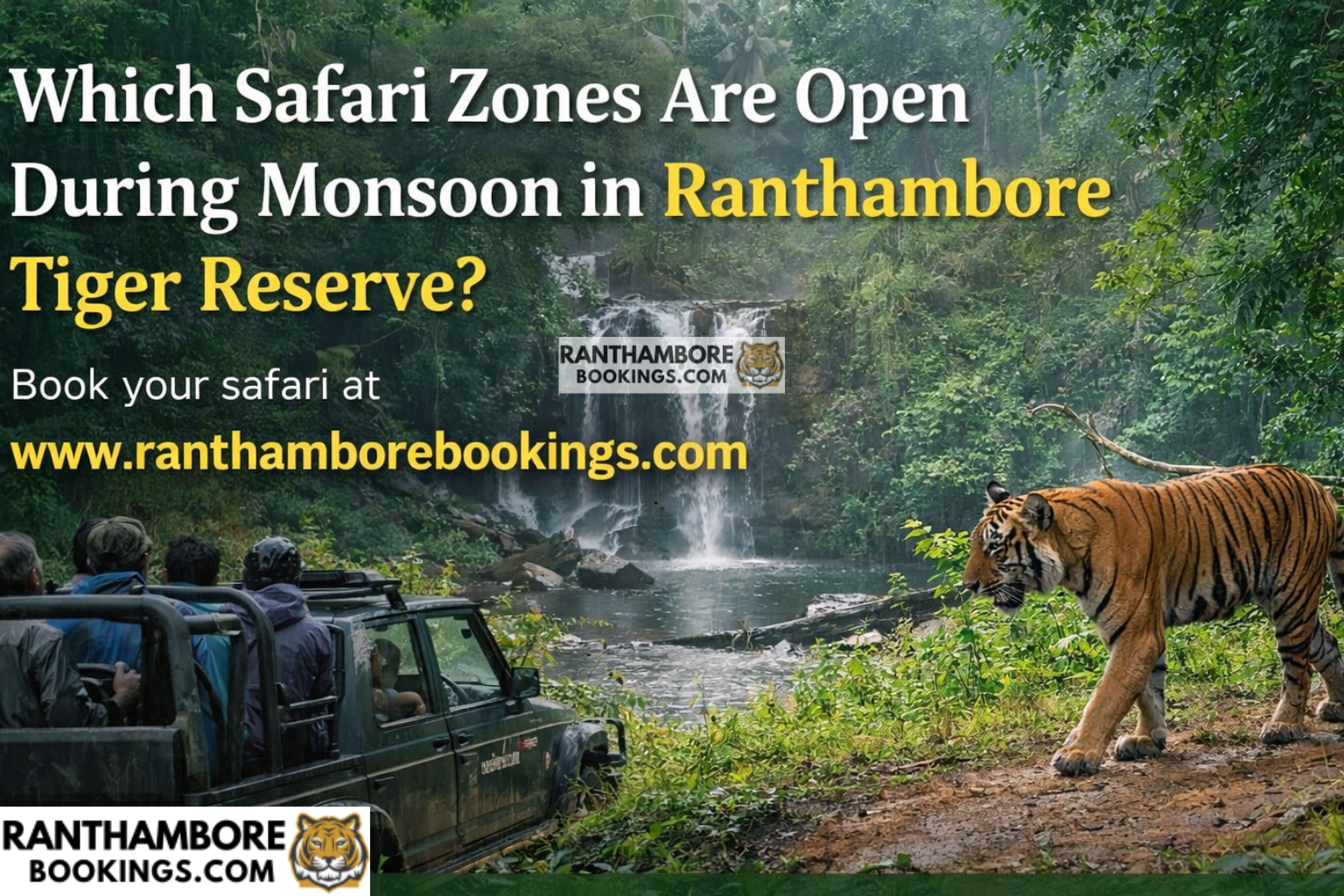
For wildlife enthusiasts, the great news is that Ranthambore safari zones 6, 7, 8, 9, and 10 remain open during the monsoon season. These zones, mainly comprising buffer and outer safari areas, are especially suitable for visits during the rainy season. They provide a unique monsoon wildlife safari, allowing visitors to witness the park’s transformation into a lush green paradise, complete with waterholes, flowing streams, and seasonal waterfalls.
These buffer zones are less crowded than the core zones, providing a more serene and immersive wildlife experience. While tiger sightings may be slightly less frequent than in the closed zones, visitors still have opportunities to spot leopards, sloth bears, wild boars, sambar deer, jackals, and a variety of birds. For photographers, the lush monsoon landscapes and vibrant wildlife activity create ideal conditions for capturing stunning images.
Open Safari Zones During Monsoon:
- Zone 6
- Zone 7
- Zone 8
- Zone 9
- Zone 10
These zones are carefully managed to provide visitors with safe safari routes while maintaining minimal disturbance to wildlife. This strategic operation ensures that monsoon safaris in Ranthambore remain an exciting and rewarding experience.
Read Also : Supreme Court Mandates Mobile Phone Ban on Ranthambore Safaris
Safari Zones You Can Visit During Monsoon
Zone 6 Monsoon Safari – Buffer Zone Exploration
Zone 6 is located on the outskirts of the core park, making it more accessible during the monsoon. Known for its open areas, waterholes, and gentle terrain, Zone 6 is ideal for visitors seeking offbeat wildlife safari experiences in Ranthambore during the rainy season.
Wildlife enthusiasts visiting this zone may spot:
- Sambar deer
- Chital (spotted deer)
- Wild boar
- Langurs and macaques
- Waterbirds around temporary ponds
The landscape in Zone 6 transforms dramatically during the monsoon, with green grasslands, newly formed streams, and blooming shrubs creating a lush backdrop for photography and jungle exploration.
Zone 7 Rainy Season Wildlife Safari
Zone 7 offers a mix of open terrain and lightly forested areas, making it suitable for monsoon wildlife spotting in Ranthambore. This zone often sees higher activity near water sources, as animals move to drink and feed in the rainy season.
Visitors may encounter:
- Tigers (occasionally near waterholes)
- Jackals and foxes
- Monitor lizards and reptiles
- A wide variety of migratory and resident birds
Zone 7’s accessibility during heavy rains makes it a favourite among travellers who prefer active wildlife safaris in Ranthambore during the monsoon.
Zone 8 Monsoon Safari Opportunities
Zone 8 is a quieter, less crowded safari area but rich in biodiversity. During the monsoon, it becomes particularly scenic, with grasslands turning green and streams flowing full. Wildlife photography in Ranthambore during monsoon is especially rewarding in Zone 8, as animals come out in open areas, and birds are more active and colourful.
Common sightings include:
- Sambar deer and spotted deer grazing in open meadows
- Sloth bears foraging near fruiting trees
- Waterbirds such as kingfishers, egrets, and herons
Zone 8 provides a peaceful experience, away from the busier core zones, while still offering opportunities to see predators like tigers and leopards.
Zone 9 Safari in Rainy Season
Zone 9 has many rivers, streams, and seasonal waterholes, attracting wildlife during the monsoon. Visitors can watch animals gathering around these water sources, offering an exceptional monsoon jungle safari experience in Ranthambore.
Notable wildlife includes:
- Tigers (occasionally spotted near riverbanks)
- Jackals and mongooses
- Deer and wild boar herds
- Migratory and native birds
The scenery in Zone 9 is particularly beautiful during the monsoon, with flowing streams and lush vegetation providing a photogenic setting for wildlife enthusiasts.
Zone 10 Monsoon Wildlife Safari
Zone 10 stands out as the most serene and secluded among the zones accessible during the monsoon. Ideal for travellers seeking a quieter monsoon safari in Ranthambore, it offers opportunities to see wildlife in their natural environment without the usual tourist crowd.
Visitors may encounter:
- Leopards and wild cats
- Sambar and spotted deer
- Birds such as peafowl, egrets, and kingfishers
- Small mammals and reptiles
Zone 10 is perfect for nature photography, jungle trekking, and offbeat safari experiences during the monsoon season.
Why Visit Ranthambore Tiger Reserve During Monsoon? (Monsoon Safari Benefits)
Visiting Ranthambore during the monsoon has unique advantages. Many people mistakenly believe the park is closed entirely during the rainy season. In reality, buffer zones remain open, allowing visitors to experience a monsoon wildlife safari in India while supporting conservation and enjoying fewer crowds.
Lush Monsoon Forest & Scenic Jungle Views
During the monsoon, the forest is rejuvenated. Streams and waterfalls fill, grasslands turn green, and the forest canopy becomes dense and vibrant. The vibrant greenery elevates the safari experience, creating perfect opportunities for photographers and nature enthusiasts alike.
Active Wildlife Viewing in Zones 6–10
While tiger sightings are more common in the dry season, Zones 6–10 still offer chances to spot:
- Tigers and leopards
- Sloth bears and jackals
- Herbivores like sambar, chital, and nilgai
- Birds, including egrets, kingfishers, and migratory species
Travel Flexibility for Rainy-Season Tourism in Rajasthan
Because Ranthambore safari zones 6–10 remain open during monsoon, visitors can plan monsoon safari tour packages in Ranthambore, an opportunity that many other Indian wildlife parks do not provide during the rainy season.
Tips for Visiting Ranthambore in Monsoon (Rainy Season Safari Advice)
Check Real-Time Safari Zone Status: Conditions can change rapidly during the monsoon. Always verify which zones are open before travelling.
Carry Rain Gear & Photography Equipment: Monsoon safaris involve rain showers and misty landscapes, providing excellent opportunities for wildlife photography in Ranthambore during the monsoon.
Book Safaris in Advance: Even the monsoon zones fill up quickly. Secure your Ranthambore monsoon safari permits online early to avoid disappointment.
Dress Appropriately: Wear quick-dry, light-coloured clothing, and carry waterproof footwear.
Respect Wildlife: During the monsoon, animals may be more active near water sources. Maintain a safe distance, minimise noise, and avoid disturbing the habitat.
Exploring Local Culture and Monsoon Tourism Near Ranthambore
Apart from wildlife, the Ranthambore region has rich cultural experiences. Monsoon is a great time to explore nearby villages, local handicrafts, and Rajasthan’s heritage. Travellers can enjoy:
- Village walks in Sawai Madhopur
- Savor authentic Rajasthani delicacies, such as dal baati churma and gatte ki sabzi.
- Fort visits, like Ranthambore Fort, which looks spectacular with monsoon clouds and greenery
Combining a monsoon wildlife safari in Ranthambore with cultural experiences enhances the overall visit and allows travellers to enjoy both nature and heritage.
Conservation Efforts and Responsible Tourism
Visiting Ranthambore during the monsoon also supports conservation initiatives. The park administration focuses on:
- Protecting core tiger habitats from human interference
- Maintaining waterholes and forest health
- Promoting ecotourism and wildlife education
- Ensuring safety for visitors and animals alike
By travelling responsibly and visiting zones 6–10 during the monsoon, tourists contribute to the park’s sustainable tourism goals while enjoying authentic wildlife encounters.
Planning Your Monsoon Safari Trip to Ranthambore
Best Time for Safari: Early morning or late afternoon safaris are ideal, as animals are most active during cooler hours.
Recommended Duration: For a meaningful experience, a 2–3 day monsoon safari itinerary is ideal.
Safari Vehicles: Open jeeps are preferred for wildlife photography. Ensure your safari reservation is officially confirmed with the Rajasthan Forest Department.
Photography Tips:
- Use a lens with at least 200–400 mm zoom for wildlife.
- Keep your gear safe from rain by using protective covers or waterproof bags.
- Photograph the lush landscapes, meandering streams, and wildlife together to create striking, dramatic shots.
Local Accommodation: Monsoon stays are more peaceful. Resorts around Sawai Madhopur offer monsoon jungle views and safari packages, often at discounted rates compared to peak season.
Final Thoughts: Best Monsoon Safari Experiences in Ranthambore
Ranthambore National Park remains one of the few Indian tiger reserves partially open during monsoon, allowing travellers to experiencea monsoon jungle safari in India without missing wildlife opportunities.
Visiting Zones 6, 7, 8, 9, and 10 during July, August, or September provides:
- Immersive jungle experiences amid lush greenery
- Active wildlife sightings, including tigers, leopards, and deer
- Peaceful safari experiences away from tourist crowds
- Stunning photography opportunities during the monsoon
For those planning an off-season visit to Ranthambore Tiger Reserve, the buffer safari zones accessible during the monsoon offer a safe, eco-friendly, and truly unforgettable wildlife experience.
Whether you are a wildlife enthusiast, photographer, or nature lover, the Ranthambore monsoon safari offers a unique window into India’s wild heart — green, vibrant, and full of life.