Ranthambore National Park is among India’s most renowned wildlife destinations and a gem of Rajasthan’s natural heritage. Located in the Sawai Madhopur district, this renowned tiger reserve spreads across dry deciduous forests, rocky hills, open meadows, and serene lakes. The dramatic backdrop of ancient ruins, especially the historic Ranthambore Fort, adds a magical charm to the landscape.
The park is part of India’s prestigious Project Tiger initiative, which was launched to protect the rapidly declining tiger population. Today, Ranthambore is considered one of the best places in India to witness wildlife in its natural habitat. A Ranthambore safari offers thrilling encounters with powerful predators, graceful herbivores, reptiles, and vibrant birdlife.
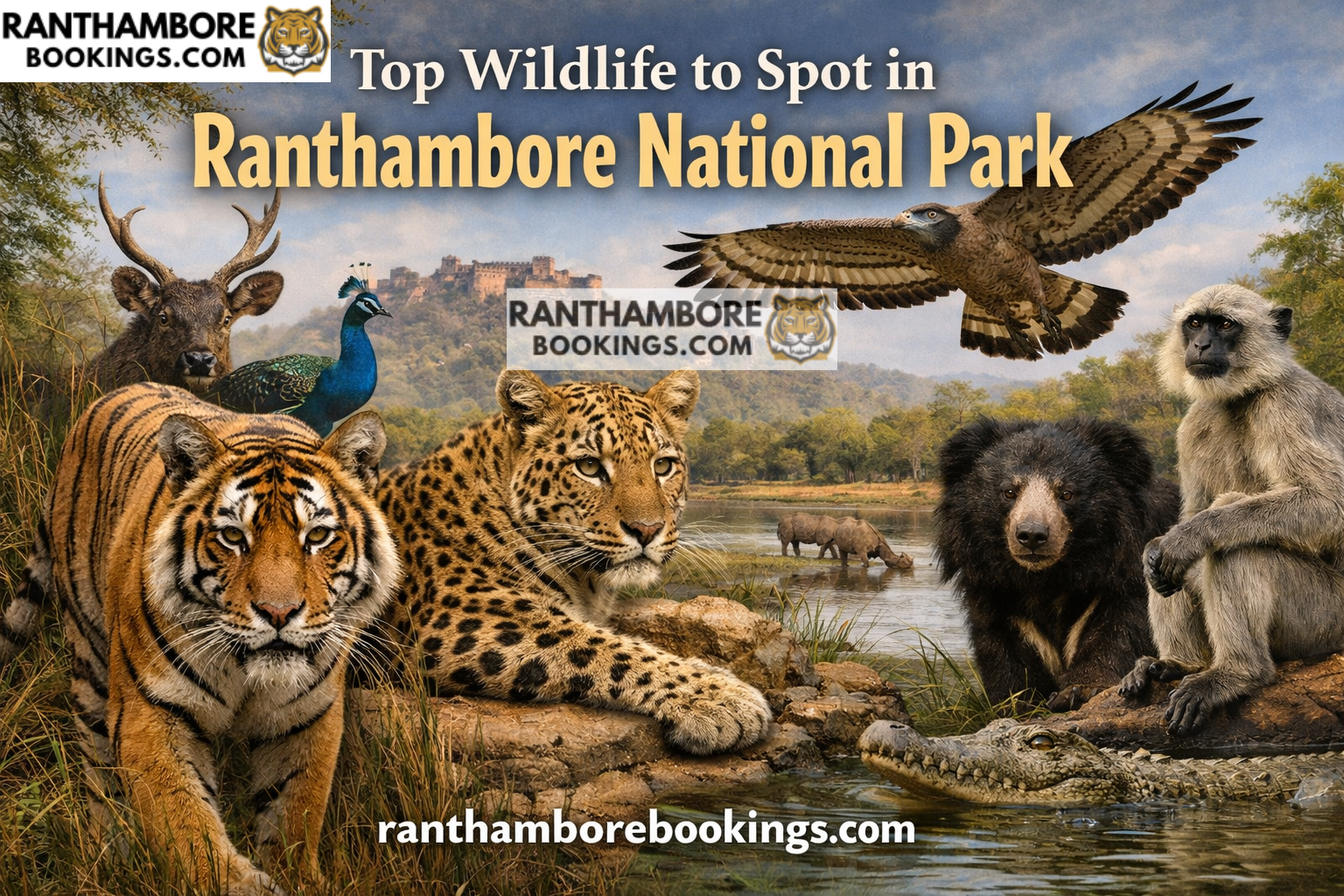
From the majestic Bengal tiger to shy leopards, alert deer, crocodiles, and colourful birds, Ranthambore National Park offers a complete and unforgettable wildlife experience.
Royal Bengal Tiger – The Main Attraction
The undisputed star of Ranthambore is the magnificent Bengal tiger. This iconic big cat is the primary reason thousands of wildlife enthusiasts and photographers visit the park every year. Ranthambore is widely regarded as one of the best places in India for tiger sightings due to its open terrain and relatively high tiger density.
Unlike dense forests where tigers remain hidden, Ranthambore’s landscape of open grasslands, lakes, and forest tracks allows better visibility. Tigers are often seen walking confidently along dusty trails, marking their territory on trees, or resting peacefully near water bodies like Padam Talao and Rajbagh Lake. During summer, sightings increase as tigers frequently visit lakes and ponds to cool off.
Each tiger in Ranthambore has a unique territory and personality. Some are known for their bold behaviour and comfort around safari vehicles. Seeing a tiger in the wild—whether crossing the road ahead of your jeep or emerging silently from tall grass—is a breathtaking and emotional moment. It represents the true spirit of the jungle and makes every Ranthambore tiger safari unforgettable.
Indian Leopard – The Silent Predator
Sharing the forest with tigers is the elusive Indian leopard. Leopards are incredibly adaptable and prefer rocky hills and quieter forest zones, often staying away from dominant tiger territories.
Leopards are masters of stealth. Their spotted coats provide perfect camouflage among rocks and dry foliage. Mostly active during dawn and dusk, they move silently and quickly, making sightings rare but thrilling. Sometimes they can be seen resting on rocky outcrops or climbing trees with remarkable agility.
A leopard sighting during a Ranthambore safari tour is considered very lucky. Their secretive nature and graceful movements make them one of the most fascinating predators of the park.
Sloth Bear – The Shaggy Resident
Another intriguing resident of Ranthambore is the sloth bear. Recognisable by its long, shaggy black fur and white chest marking, the sloth bear is quite different from other bear species.
Sloth bears primarily feed on termites, ants, fruits, and honey. They use their strong claws to dig into termite mounds and fallen logs. These bears are usually active during cooler parts of the day, especially early mornings and late afternoons.
Although sightings are less common compared to deer or monkeys, encountering a sloth bear during a Ranthambore wildlife safari adds immense excitement. Watching one walk slowly across the forest floor or dig for insects is a unique experience.
Striped Hyena – The Night Explorer
The elusive striped hyena is one of the most mysterious carnivores found in Ranthambore National Park. Unlike the more dominant tiger or leopard, the striped hyena prefers to stay hidden and avoids confrontation. Mostly nocturnal in nature, this fascinating predator becomes active after sunset, silently moving through forest trails, rocky terrain, and dry riverbeds in search of food. However, on rare occasions, early morning safari visitors may catch a glimpse of a hyena returning to its den after a night of scavenging.
The striped hyena is easily recognised by its greyish coat with black stripes, pointed ears, and a distinctive mane that stands upright when it feels threatened. Though often misunderstood, hyenas are extremely intelligent and resourceful animals. They primarily feed on carcasses left behind by larger predators like tigers and leopards, playing a crucial role in cleaning the forest ecosystem. By consuming remains, they help prevent the spread of disease and maintain ecological balance.
Despite their shy behaviour, spotting a striped hyena during a Ranthambore jeep safari is a special and memorable experience. Watching this solitary scavenger trot quietly across the landscape offers a rare insight into the lesser-seen side of the jungle.
Sambar Deer – The Alert Guardian
The majestic Sambar Deer is the largest deer species inhabiting Ranthambore. With their dark brown coats, large ears, and impressive antlers in males, sambar deer are a powerful presence in the forest. They are commonly found near lakes, marshy patches, and dense forest edges where vegetation and water are abundant.
Sambar deer play a vital role in the park’s food chain as one of the primary prey species for tigers and leopards. However, they are not defenceless. Known for their sharp senses, sambars are extremely alert animals. Their loud and distinct alarm calls echo through the forest whenever a predator is nearby. Safari guides often rely on these warning calls to track tiger movements, making the sambar an important “guardian” of the jungle.
Observing a herd of sambar deer grazing peacefully near a water body, or standing still and alert with ears raised, adds a dramatic and immersive element to the safari experience. Their presence highlights the delicate balance between predator and prey in Ranthambore.
Spotted Deer (Chital) – The Most Common Sight
The graceful chital, commonly known as the spotted deer, is the most frequently seen animal in the park. These elegant herbivores are easily recognised by their golden-brown coats decorated with bright white spots. They move in large herds and are often seen grazing in open grasslands or resting under shady trees.
Chital are highly social creatures that often coexist with langurs, forming a mutually beneficial relationship in their shared habitat. While chital graze on fallen leaves and grass, langurs feed on fruits and leaves from trees. If a predator approaches, both species alert each other through warning calls.
As one of the primary prey animals for tigers and leopards, chital play a central role in maintaining the ecological balance of Ranthambore. Almost every safari guarantees sightings of these beautiful deer, making them a constant and lively presence in the forest landscape.
Nilgai – The Blue Bull
The impressive nilgai, also known as the blue bull, is India’s largest antelope species. Male nilgai are distinguished by their bluish-grey coats and short, sharp horns, while females have a lighter brown colour. Their sturdy build and long legs give them a powerful and graceful appearance.
Nilgai are usually seen grazing calmly in open grasslands and forest clearings. Though they may appear gentle, they are strong runners and can quickly escape danger if threatened. Unlike deer, nilgai tend to be less skittish, often allowing safari vehicles to observe them from a distance.
Their presence adds diversity to the herbivore population of Ranthambore and enhances the overall safari experience with their unique size and appearance.
Wild Boar – The Forest Forager
The adaptable wild boar is another common resident of Ranthambore. These sturdy animals are known for their sharp tusks, bristly hair, and strong snouts, which they use to dig into the forest floor in search of roots, insects, and fallen fruits.
Wild boars are highly intelligent and often move in small family groups. Though they may look harmless while foraging, they can become defensive if threatened. They are also an important prey species for tigers, contributing to the predator-prey dynamics of the park.
Spotting wild boars crossing a forest path or digging near bushes adds another lively element to the safari journey.
Dhole – The Indian Wild Dog
The energetic dhole, also known as the Indian wild dog, is one of the most efficient pack hunters in the forest. Dholes are medium-sized predators with reddish-brown coats and bushy tails. They are highly social animals that live and hunt in coordinated packs.
Unlike solitary predators, dholes rely on teamwork and communication to chase down prey. Their sharp whistles and coordinated movements make them fascinating to observe. Although sightings are less common compared to deer or monkeys, encountering a pack of dholes during a safari is an extraordinary experience that showcases the complexity of wildlife behaviour.
Their presence highlights the diversity of predators in Ranthambore beyond just tigers and leopards.
Mugger Crocodile – The Lake Predator
The calm waters of Ranthambore’s lakes are home to the formidable mugger crocodile. These large reptiles are often seen basking on the muddy banks of famous water bodies like Padam Talao and Rajbagh Lake. With their armoured bodies and powerful jaws, mugger crocodiles are perfectly adapted to aquatic life.
They remain motionless for long periods, blending into their surroundings before suddenly gliding through the water with surprising speed. Watching a crocodile slide silently beneath the surface adds suspense and excitement to the safari experience.
The presence of crocodiles highlights the rich aquatic ecosystem within Ranthambore.
Langurs and Monkeys
The lively Northern Plains grey langur and the playful rhesus macaque are commonly seen throughout the park. Langurs often perch on tall trees or ancient ruins, while macaques are more active on the ground.
Langurs play a crucial ecological role by acting as early warning systems. Their sharp alarm calls alert other animals to the presence of predators. Observing their social behaviour, grooming habits, and playful interactions adds charm and movement to the forest atmosphere.
Birdlife and Reptiles
Ranthambore is a paradise for bird lovers, with over 300 recorded species. Birds such as the Indian peafowl, crested serpent eagle, and colourful kingfishers brighten the forest landscape. During winter, migratory birds visit the lakes, making it an excellent time for birdwatching.
Reptiles such as monitor lizards and various snake species also thrive here, contributing to the biodiversity of the park. These lesser-noticed creatures are equally important in maintaining ecological balance.
Best Time to Visit Ranthambore
The ideal time to visit RanthamboreBookings.com is from October to June. During summer months, animals gather around water sources, increasing the chances of tiger and wildlife sightings. Winter offers comfortable weather and excellent opportunities for birdwatching and photography.
Morning and evening safaris provide the best light and higher chances of spotting active wildlife.
Final Thoughts
A journey through Ranthambore is an immersive experience into India’s wild heart. From the silent striped hyena and alert sambar deer to graceful chital, powerful nilgai, cunning dholes, and ancient crocodiles, the park showcases extraordinary biodiversity.
Every safari ride brings anticipation and surprise. Whether you witness dramatic predator-prey interactions or peaceful grazing scenes near a lake, Ranthambore leaves a lasting impression. It is a destination where nature, history, and wildlife come together to create unforgettable memories for every traveller.