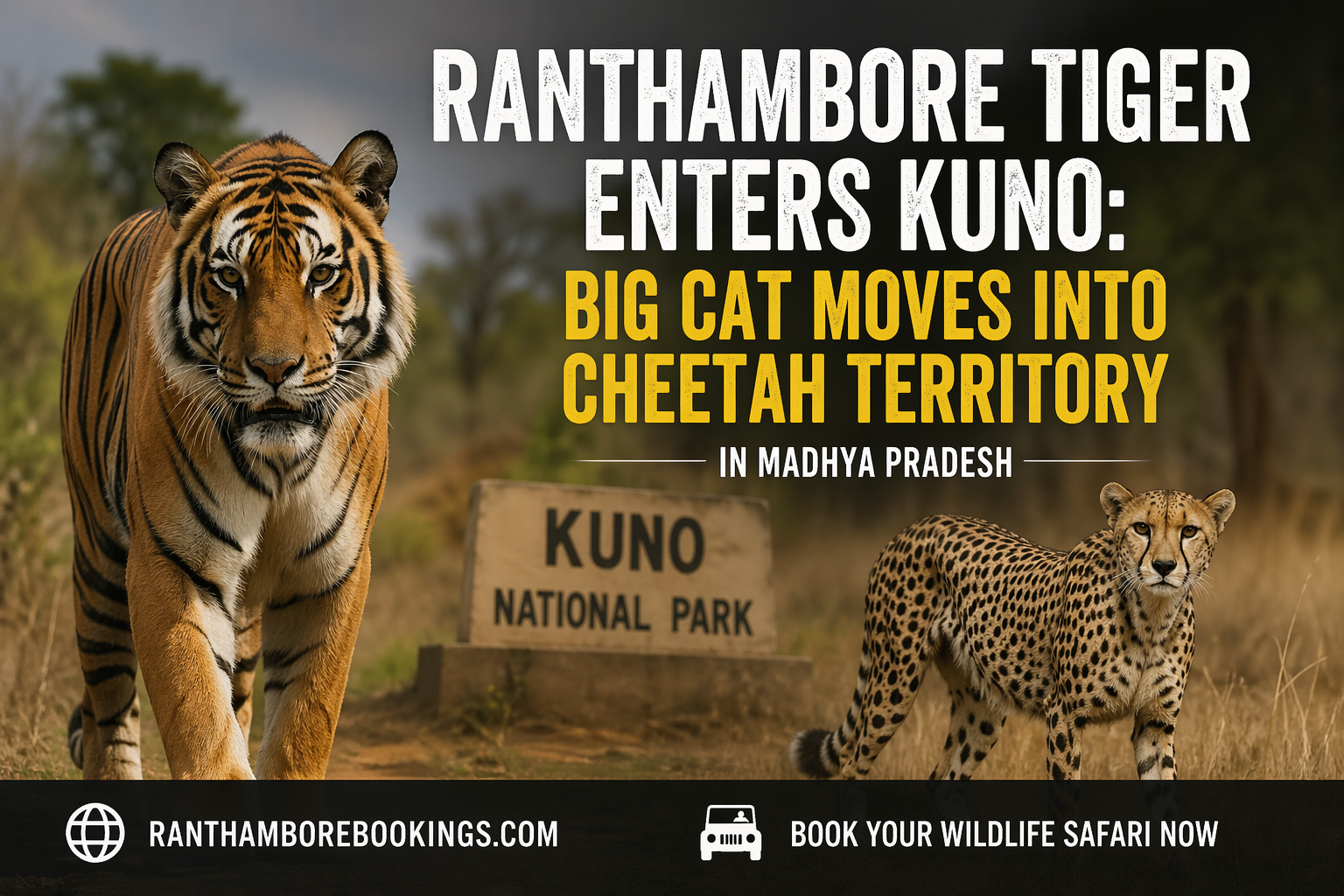
A surprising wildlife movement has caught the attention of forest and wildlife lovers across India. A tiger from Rajasthan’s Ranthambore Tiger Reserve (RTR) has entered the cheetah territory of Kuno National Park (KNP) in Madhya Pradesh, raising curiosity about the interaction between two of the world’s fastest and most powerful predators.
According to officials, the tiger—identified as T-2512—was spotted inside Kuno on April 23. This is not the first time such movement has been recorded. Forest staff confirmed that the same tiger had been seen in the area a couple of months ago, highlighting how wildlife moves freely across interconnected forest landscapes.
Tiger Movement Between Ranthambore and Kuno
Ranthambore National Park is located roughly 70–100 km from Kuno National Park, depending on the route. The distance may seem significant, but for a tiger, it is well within roaming range. These big cats are known to travel long distances in search of territory, food, or mating opportunities.
Explained that the forests between Rajasthan and Madhya Pradesh form a shared wildlife corridor, allowing animals like Ranthambore tigers to move naturally without human boundaries. The journey from Ranthambore to Sheopur (near Kuno) takes about two hours by road, but in the wild, such movements may take days.
What This Means for Cheetahs in Kuno
Kuno National Park is currently home to 54 cheetahs, including cubs, making it the center of India’s ambitious cheetah reintroduction project.
- 8 cheetahs were brought from Namibia (September 2022)
- 12 cheetahs arrived from South Africa (February 2023)
- 9 cheetahs were recently translocated from Botswana (February 2026)
This project was launched after cheetahs became extinct in India nearly 70 years ago.
At present, 57 cheetahs exist in India, with:
- 3 relocated to Gandhi Sagar Wildlife Sanctuary
- Remaining population residing in Kuno
The presence of a Ranthambore tiger inside Kuno raises natural concerns. Tigers are apex predators and could pose a threat to cheetahs, especially cubs. However, wildlife experts believe such encounters are rare and manageable, as both species tend to avoid direct conflict.
To reduce risks, Forest members have already distributed cheetahs across different Ranthambore Safari zones, minimizing overcrowding and disease spread.
Is Tiger vs Cheetah Conflict Likely?
While the idea of a tiger entering cheetah territory sounds dramatic, actual conflict is unlikely in most cases. Here’s why:
- Tigers prefer dense forests, while cheetahs Favor open grasslands
- Cheetahs avoid confrontation and rely on speed rather than strength
- Wildlife habitats in Kuno are being managed carefully
Still, monitoring has been intensified to ensure the safety of both species.
A Positive Sign of a Healthy Ecosystem
Rather than being a threat, such movement is often seen as a positive ecological indicator. It shows that:
- Forest corridors are functional
- Wildlife populations are growing
- Natural dispersal is taking place
India’s conservation efforts, especially in tiger reserves like Ranthambore and projects like Kuno, are creating thriving habitats for big cats.
Wildlife Tourism Boost: Why This News Matters
This rare development has also increased interest among wildlife tourists. The possibility of seeing both tigers and cheetahs in connected landscapes makes central India one of the most exciting safari destinations in the world.
Also Read: Ranthambore Safari Booking Online Process 2026
If you’re planning a Safari trip, this is the perfect time to explore:
- Ranthambore Tiger Reserve – Famous for high tiger sightings
- Kuno National Park – India’s only home of wild cheetahs
Booking your safari in advance is highly recommended, especially during peak seasons.
Ranthambore Safari Booking: Secure your Gypsy safari early for the best zones
Kuno Safari Experience: Witness the historic cheetah reintroduction project
Early booking ensures better chances of sightings and preferred safari slots.
Conclusion
The entry of a Ranthambore tiger into Kuno National Park highlights the dynamic and evolving nature of India’s wildlife ecosystems. While it raises questions about predator interactions, it also reflects the success of conservation efforts and habitat connectivity.
For wildlife enthusiasts, this is more than just news—it’s a reminder that India remains one of the best places in the world to witness raw, real, and unpredictable nature.