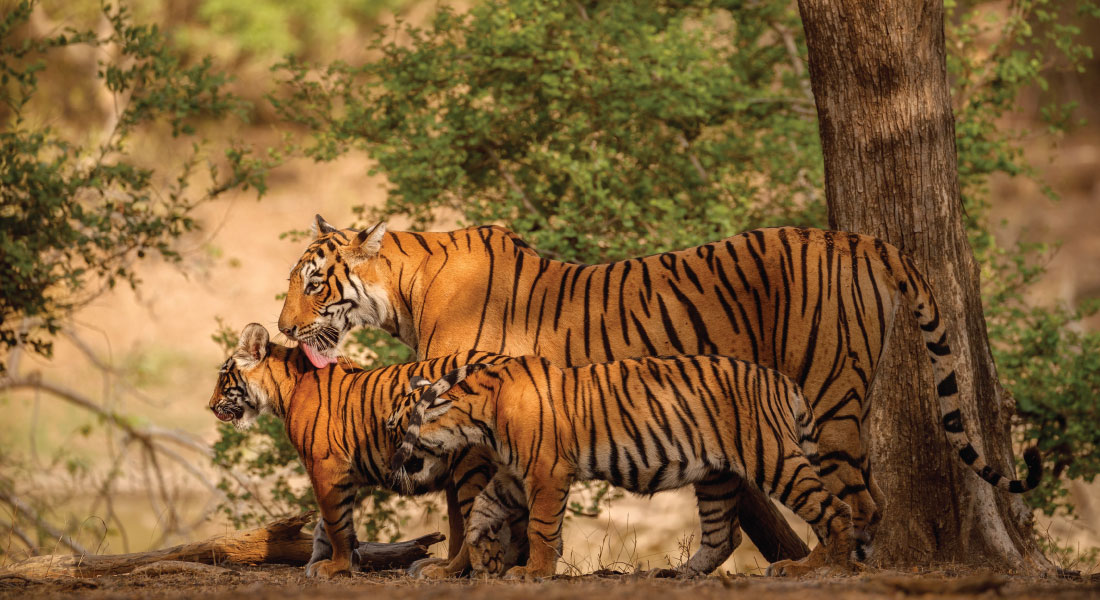

Ranthambore National Park has long been a favorite among wildlife lovers, photographers, and adventure seekers from across the globe. Famous for its rich biodiversity, stunning landscapes, and royal Bengal tigers, the park provides an experience that is both exciting and humbling. Every safari offers the chance for surprises, but sometimes Ranthambore presents moments so unique and remarkable that they catch national attention.
Ranthambore National Park is one of India’s top wildlife spots, celebrated for its majestic tigers and the ancient ruins of the UNESCO-listed Ranthambore Fort. It is home to several tiger families, giving visitors a rare chance to see these magnificent animals in their natural environment.
Located in Rajasthan’s Sawai Madhopur district, the park uniquely blends history and wilderness. Ancient banyan trees, lakes, rocky formations, and centuries-old structures create the backdrop for one of India’s most successful tiger conservation efforts.
A Dream Destination for Tiger Sightings
For many travelers, visiting Ranthambore is driven by one goal: seeing a tiger in the wild. The excitement of observing these powerful predators move silently through the jungle is unmatched. Each sighting feels like a special gift, a brief connection with nature in its purest form.
For wildlife enthusiasts, spotting a tiger during a safari is a dream come true. However, seeing a tiger cub—especially without venturing deep into the forest—is an experience few get to enjoy.
Tiger cub sightings are particularly rare. Mothers usually keep cubs hidden in thick forest cover until they are strong enough to explore larger areas. That’s why a recent sighting near Ranthambore Fort amazed tourists and wildlife lovers.
An Unexpected and Rare Encounter
Recently, visitors to the Ranthambore Fort area witnessed an unforgettable sight when a tiger cub wandered into a parking lot. The cub likely belongs to Riddhi, the well-known tigress known as T-124, who raises her cubs in areas often visited by tourists. Her presence near human-accessible zones has made her one of the park’s most recognized residents.
The fort area is close to the tiger reserve’s boundaries, where the forested regions gradually meet areas of human activity. While adult tigers are sometimes seen near roads or forest paths, a cub appearing in a busy parking area is extremely unusual.
This rare encounter left visitors in awe, with many capturing the moment on their phones as the cub confidently explored its surroundings. Such sightings highlight the thriving tiger population of Ranthambore and reinforce its reputation as one of India’s top tiger reserves.
The Viral Video That Captured Hearts
A rare moment unfolded when a tiger cub calmly entered the parking area near Ranthambore Fort, surprising nearby tourists.
The video quickly went viral on social media. It shows the cub walking slowly and confidently, seeming curious rather than scared.
In the video, recorded by tourists, the tiger cub surveys the area before gradually heading back into the forest. People can be heard reacting with excitement and disbelief, as sightings like this outside the core jungle area are rare.
There’s something deeply touching about watching a young wild animal navigate a space primarily occupied by humans. The cub’s calmness and natural curiosity reflect both wildlife adaptability and the delicate balance between conservation success and human growth.
Ranthambore’s Tigers and Shared Landscapes
Ranthambore National Park is famous for its diverse wildlife, especially its tigers. The fort area is near the tiger reserve, and animals are sometimes seen in nearby human settlements. However, seeing a tiger cub in a busy parking area is both thrilling and a reminder that humans share space with wildlife.
As tiger numbers recover and grow due to effective conservation strategies, encounters near buffer zones are becoming more common. While this indicates ecological health, it also emphasizes our responsibility to coexist respectfully with wildlife.
Ranthambore Fort, perched on a hill and surrounded by forest, has long been part of the tigers’ territory. Tigers have been photographed resting near ancient walls, walking along fort paths, and drinking from nearby lakes, creating some of India’s most iconic wildlife images.
Safety, Responsibility, and Conservation Awareness
With exciting sightings come important responsibilities. Forest authorities quickly issued guidance following the incident.
Officials advised visitors to stay calm, keep a safe distance, and avoid disturbing animals in such situations. Experts believe the cub was likely exploring and not aggressive.
This advice is crucial. Loud noises, crowding, or attempts to approach wildlife can stress animals and lead to dangerous situations. Responsible tourism helps ensure these magical moments remain safe for both humans and animals.
A Powerful Reminder for the Future
The viral video not only highlights the beauty of Ranthambore but also serves as a strong reminder to protect wildlife and their habitats for future generations.
Encounters like these showcase decades of conservation efforts, anti-poaching initiatives, and community involvement. Ranthambore’s success story shows that when nature is given space and protection, it thrives.
However, it also reminds us that conservation is ongoing. Protecting buffer zones, promoting ethical tourism, and raising awareness are essential to ensure future generations can continue to witness such extraordinary moments.
Final Thoughts
Seeing a tiger cub calmly wandering near Ranthambore Fort is more than just a viral moment; it symbolizes hope, coexistence, and the enduring spirit of the wild. It reinforces why Ranthambore remains one of India’s most cherished wildlife spots and why every visit holds the promise of wonder.
For those planning a trip to this iconic reserve, RanthamboreBookings.com still offers not just sightings but stories—stories that linger long after the safari ends.