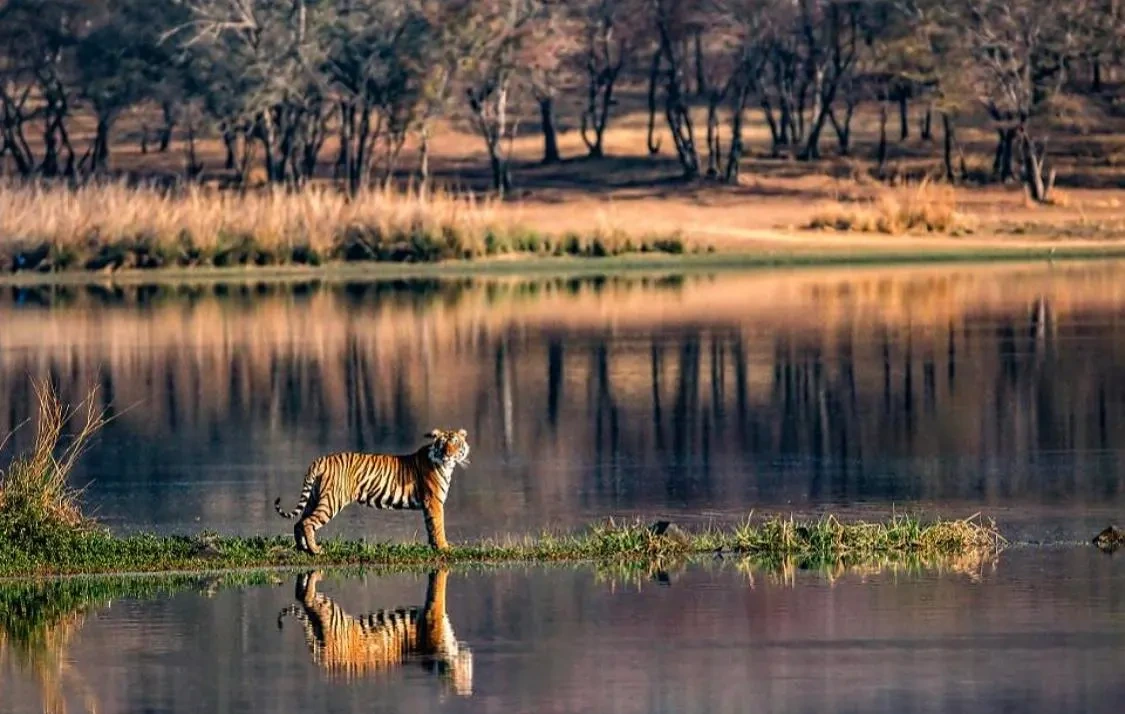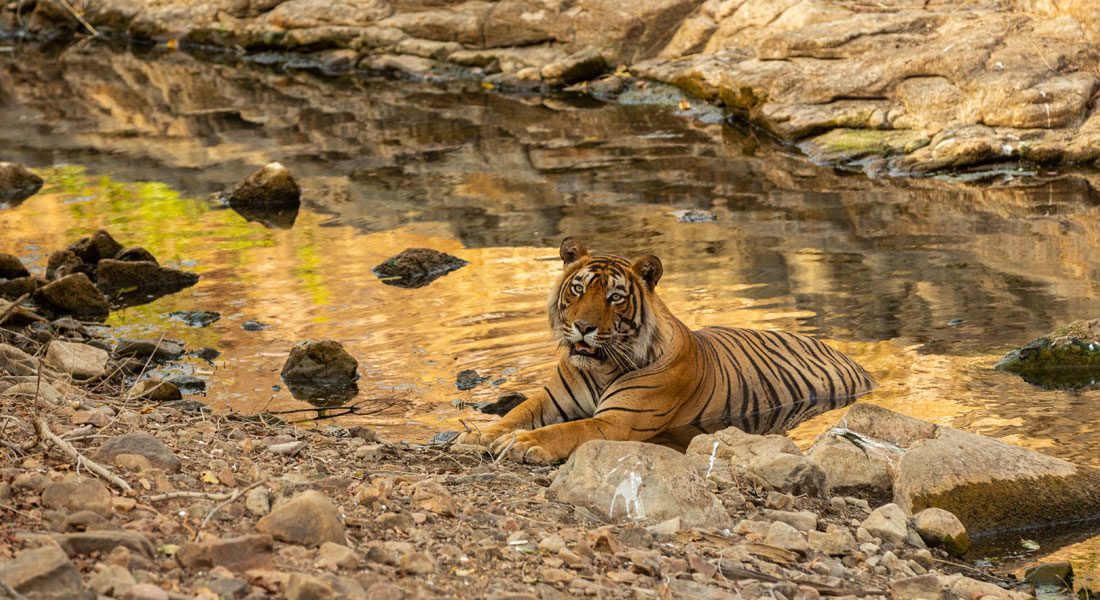

Deep inside the rugged forests and ancient ruins of Ranthambore National Park in Rajasthan, India, a remarkable moment of motherhood recently unfolded. The famous tigress Sultana was captured on camera carefully carrying her tiny cubs—both less than eight weeks old—to a new den site tucked safely into a rocky cliffside.
The rare footage and photographs reveal not only the tenderness of a tiger mother but also the incredible survival instincts that shape life in the wild. Moments like these are rarely witnessed, even in a park as famous for tiger sightings as Ranthambore. Wildlife photographers and naturalists often spend years observing the lives of tigers, yet intimate family moments like a mother relocating her cubs remain extremely rare.
The scene was both powerful and delicate. Sultana moved cautiously through rocky terrain, carrying each cub gently in her mouth by the loose skin on the back of its neck. The cubs, tiny and helpless, depended entirely on their mother’s strength and instincts. For them, this journey from one den to another was not just a simple relocation—it was a critical step for survival in the wild.
Such scenes remind us that the lives of wild animals are shaped by constant challenges. Every decision a tiger makes—where to hunt, where to rest, and where to raise cubs—can determine the survival of the next generation.
The Queen of Ranthambore Tigress Sultana
Sultana is one of the well-known tigresses of Ranthambore National Park. Like many dominant females in the park, she controls a defined territory consisting of forests, water bodies, rocky escarpments, and ancient ruins scattered throughout the reserve.
Ranthambore is famous not only for its tigers but also for its dramatic landscape. The park features steep cliffs, dry deciduous forests, grasslands, and historic structures that date back centuries. These natural and man-made features create ideal hiding places and hunting grounds for tigers.
A female tiger’s territory is extremely important because it must provide everything necessary to raise cubs successfully. Within her territory, a tigress needs:
● Reliable prey animals
● Access to water sources
● Safe resting places
● Hidden denning sites for cubs
● Areas with minimal disturbance
Sultana’s territory appears to provide exactly these conditions. The dense forest patches offer cover for hunting, while rocky cliffs and caves provide secure shelters for cubs.
Female tigers are solitary animals and fiercely protective mothers. Once they give birth, their lives revolve entirely around their cubs. Unlike lions, which live in groups, tigers raise their young alone. This means that every responsibility—from hunting to protection—falls solely on the mother.
For Sultana, raising cubs is both a challenge and a test of endurance. She must hunt enough prey to sustain herself while also producing milk for her young. At the same time, she must constantly remain alert for threats that could harm her cubs.
Life Begins in Secrecy
Tiger cubs are born in hidden dens far away from open areas or frequently used animal trails. These dens are usually located in secluded places such as caves, thick vegetation, rocky crevices, or abandoned burrows.
When cubs are born, they are completely helpless. They weigh around one kilogram and are blind during their first week of life. Their eyes usually open after about six to ten days.
For the first few weeks, the cubs rely entirely on their mother’s milk. They cannot walk properly and spend most of their time sleeping. During this stage, the mother rarely leaves the den for long periods.
At less than eight weeks old, Sultana’s cubs are still extremely vulnerable. Their bodies are small and fragile, and they lack the strength to travel long distances. If the mother were forced to move quickly through the forest, the cubs would not be able to keep up.
Because of this vulnerability, tigresses often move their cubs between multiple den sites during the first few months of life. This behaviour is a survival strategy that helps prevent predators from discovering the cubs.
In the wild, tiger cubs face many threats, including:
● Male tigers that may kill cubs to bring the female back into breeding condition
● Leopards that may attack young cubs
● Packs of wild dogs
● Hyenas and other scavengers
● Accidental encounters with large prey animals
By relocating her cubs periodically, Sultana reduces the chances that predators will locate the den.
A Mother’s Strength
The footage of Sultana carrying her cubs highlights one of the most touching behaviours seen in big cats. Tigresses pick up their cubs by gently gripping the loose skin on the back of the neck.
This natural grip triggers a reflex in the cub that causes it to relax and remain still. It is a behaviour also seen in domestic cats and many other feline species.
However, carrying cubs across rugged terrain is far from easy. Ranthambore’s landscape includes rocky slopes, dense forests, and uneven ground. Navigating these obstacles while carrying a cub requires both strength and precision.
Sultana likely had to make multiple trips between the old den and the new one. She would carry one cub at a time, place it safely in the new location, and then return to retrieve the other.
During these journeys, the tigress must remain extremely alert. A predator or rival tiger encountering her while she carries a cub could create a dangerous situation.
The cliffside den that Sultana chose offers several advantages:
● Natural protection from predators
● Limited access, making it difficult for animals to reach the cubs
● Shade and cooler temperatures during the hot afternoons
● Elevated views, allowing the tigress to monitor her surroundings
Rocky den sites are commonly used by tigresses in landscapes like Ranthambore because they provide excellent security for young cubs.
The Critical Early Months
The first few months of a tiger cub’s life are the most dangerous. Wildlife research has shown that many cubs do not survive their first year due to predation, starvation, disease, or territorial conflicts.
For Sultana, this period requires constant effort and vigilance.
She must balance two major responsibilities:
Hunting regularly
A tigress must hunt frequently to maintain her strength and produce milk for her cubs. Tigers primarily hunt large prey such as deer and wild boar.
In Ranthambore, common prey species include:
● Sambar Deer
● Chital (spotted deer)
● Wild Boar
● Nilgai (blue bull)
A successful hunt can feed a tigress for several days, but hunting itself requires enormous energy and patience.
Protecting the cubs
While the cubs remain in the den, they are defenceless. The mother must return frequently to nurse them and ensure no predators have discovered the location.
As the cubs grow older, they begin exploring the area around the den. By around three months, they become more active and curious.
At five to six months, cubs begin accompanying their mother on short walks. During these trips, they observe how she moves through the forest and how she stalks prey.
Learning the Ways of the Forest
The education of tiger cubs happens entirely through observation and experience. Young cubs spend many months watching their mother hunt. At first, they simply follow her and play near the kill. Gradually, they begin practising hunting skills through play.
Cubs often:
● Pounce on each other
● Stalk insects or birds
● Chase small animals
● Practice biting and wrestling
These playful behaviours are actually training exercises that prepare them for real hunting.
When the cubs reach around 10 to 12 months, they start participating more actively in hunts. Although they are still inexperienced, they begin learning how to coordinate movements and approach prey quietly.
By the time they are 18 months old, cubs are capable hunters but still rely on their mother for support.
Eventually, after nearly two years, the cubs become independent and leave their mother’s territory to establish their own.
Ranthambore: A Global Tiger Stronghold
Ranthambore National Park is one of the most famous tiger reserves in the world. Located in south-eastern Rajasthan, the park covers a landscape filled with lakes, dry forests, rocky hills, and ancient ruins.
At the heart of the park stands the historic Ranthambore Fort, a centuries-old structure that overlooks the forest below.
The park is part of India’s ambitious tiger conservation programme known as Project Tiger, which was launched in 1973 to protect the country’s declining tiger population.
Since then, India has made remarkable progress in tiger conservation. The country now holds the majority of the world’s wild tigers.
Ranthambore plays an important role in this success story. Its relatively open terrain and high tiger density make it one of the best places in the world to see wild tigers.
Over the years, many individual tigers from Ranthambore have become famous among wildlife photographers and conservationists. Each tiger has its own unique stripe pattern and personality, allowing researchers to identify them individually.
Tigers and Tourism
Ranthambore is also one of India’s most popular wildlife tourism destinations. Thousands of visitors travel to the park each year hoping to see a tiger in the wild.
Tourism, when managed responsibly, can help conservation efforts by:
● Generating income for park protection
● Supporting local communities
● Raising awareness about wildlife conservation
However, strict rules are necessary to ensure tourism does not disturb wildlife, especially during sensitive periods such as when tigresses are raising cubs.
Forest officials carefully monitor tiger movements and sometimes restrict access to areas where cubs are known to be present.
The Importance of Tiger Mothers
The survival of tiger populations depends heavily on the success of mothers like Sultana.
A single tigress may give birth to a litter every two to three years, typically producing two to four cubs. However, not all cubs survive to adulthood.
If a tigress successfully raises her cubs to independence, she contributes significantly to the growth of the tiger population.
This makes maternal care one of the most critical aspects of tiger conservation. Every action Sultana takes—choosing a safe den, moving cubs, hunting effectively—directly influences the survival of her offspring.
A Glimpse Into Wild Motherhood
Seeing a tigress move her cubs to a new den is an incredibly rare and intimate glimpse into tiger family life. It highlights the powerful bond between mother and cubs and the incredible effort required to ensure their survival. Such moments remind us that wildlife photography and conservation are not just about capturing dramatic images of predators. They are also about documenting the quieter, more emotional aspects of life in the wild.
Sultana’s careful journey across rocky cliffs with her tiny cubs demonstrates the strength, patience, and intelligence of tiger mothers.
For now, her cubs remain hidden in their cliffside nursery—safe under the watchful care of their mother.
The Future of Sultana’s Cubs
If the cubs survive the difficult first year, they will slowly grow into powerful young tigers. One day, the male cub may leave Ranthambore in search of new territory, possibly
travelling hundreds of kilometres through forests and corridors. The female cub may eventually establish her own territory nearby.
Years from now, these cubs could become the next rulers of the forest, continuing the legendary tiger lineage of Ranthambore.
Their survival depends on many factors: prey availability, habitat protection, and the continued success of conservation programmes.
But for now, their world is simple—warm sunlight, the safety of their cliffside den, and the watchful presence of their mother, Sultana.
And somewhere in the silent forests of Ranthambore, a tigress walks carefully through the shadows, carrying the future of her species in her jaws.