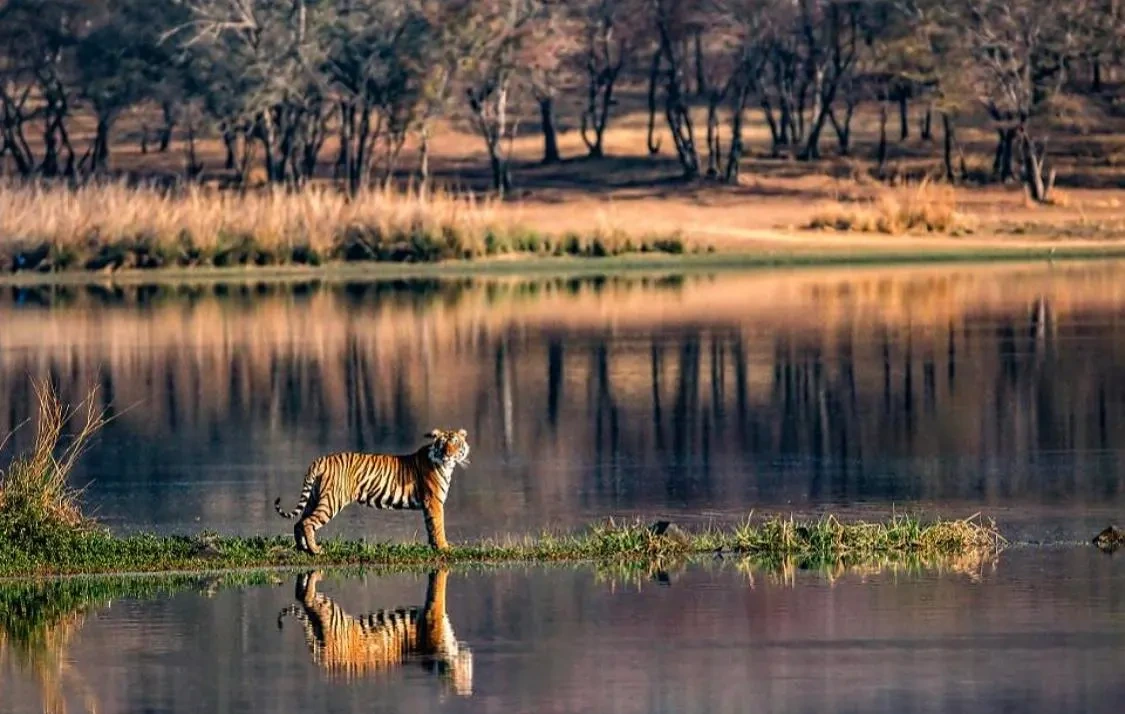

Ranthambore Tiger Enters Kuno National Park: RBT-2512 Spotted After Four Months, Raising Conservation Concerns
In a rare and significant event for India’s wildlife conservation, a Ranthambore tiger entered Kuno National Park in Madhya Pradesh after being missing for approximately three to four months. The tiger, identified as RBT-2512, a sub-adult male from Rajasthan’s Ranthambore Tiger Reserve, was recently confirmed inside the protected forest landscape of Kuno, which is home to India’s pioneering cheetah reintroduction project in Kuno National Park. The sighting, made by tourists on a safari near Tiktoli Gate, has raised widespread attention among conservationists, ecologists, and wildlife enthusiasts about potential interactions between apex predators and the newly introduced cheetahs.
This incident highlights the dynamic nature of tiger dispersal, the importance of wildlife corridors between Ranthambore and Kuno, and the challenges of balancing apex predator conservation with the protection of reintroduced species.
Tiger Identified as RBT-2512: Background and Ecological Significance
Forest officials confirmed that the tiger spotted in Kuno is RBT-2512, a sub-adult male and cub of the famous Ranthambore tigress T-107, popularly known as Sultana. RBT-2512 is estimated to be between 2.5 and 3 years old, the prime age at which young tigers leave their natal territory in search of new lands.
This dispersal behaviour is a natural and essential ecological process known as young subadult tiger migration in India. As tiger populations in Ranthambore increase, subadult males are often forced to move out of their mothers’ territory to avoid direct competition with dominant adults. This migration ensures genetic diversity, reduces territorial conflicts, and allows younger tigers to establish their own hunting and breeding grounds.
Experts note that RBT-2512’s movement is a clear example of tiger dispersal from Ranthambore to Madhya Pradesh forests, demonstrating the importance of connected habitats for tiger survival and the need for safe passageways across state boundaries.
First Confirmed Sighting in Kuno: Safari Tourists Report Tiger
While forest authorities had suspected a tiger’s presence in Kuno for months, the recent sighting is the first confirmed visual record of RBT-2512. Tourists on a flying cat safari near Tiktoli Gate observed the tiger resting quietly amidst the dense forest cover. Upon noticing the approaching safari vehicle, the tiger moved a short distance before vanishing into thick vegetation.
This observation provides crucial insight into the tiger’s behaviour. RBT-2512 displayed cautious but confident exploration, signalling its adaptation to the new habitat while avoiding unnecessary risks. For wildlife managers, this confirmed sighting underscores the need for continuous monitoring of tiger movements in Madhya Pradesh, particularly in regions like Kuno, where apex predators coexist alongside vulnerable species such as the reintroduced cheetah.
Why RBT-2512’s Presence Raises Conservation Concerns
Although tigers are integral to the forest ecosystem, the presence of Ranthambore tiger RBT-2512 in Kuno National Park raises concerns for the cheetah reintroduction project in Kuno National Park. Tigers are apex predators and highly territorial, often defending their hunting grounds aggressively. In contrast, cheetahs are smaller, less dominant predators that rely on speed rather than strength.
Wildlife experts caution that a tiger in Kuno could potentially disrupt cheetah movement, breeding, and hunting patterns, which could undermine years of conservation planning. This situation highlights the urgent need for tiger-cheetah conflict management in Kuno, combining habitat zoning, monitoring, and intervention strategies to ensure the coexistence of apex predators and vulnerable species.
Historical Context: Ranthambore Tigers in Kuno
RBT-2512 is not the first tiger from Ranthambore to reach Kuno National Park. Historical data show that several young tigers have ventured into Kuno over the past decade:
- T-38, which stayed in Kuno for a prolonged period before returning to Ranthambore between 2020 and 2021
- T-72, T-47 (Monu), T-132, and T-136, which also explored Kuno’s forests in earlier years
These movements demonstrate the natural migration patterns of subadult tigers and emphasise the critical importance of interstate wildlife corridors, active monitoring, and adaptive management strategies to maintain balance between predator populations and species reintroduction initiatives.
Chambal River: A Critical Wildlife Corridor
The Chambal River, flowing along the Rajasthan–Madhya Pradesh border, acts as a vital ecological corridor connecting Ranthambore and Kuno. This corridor allows tigers like RBT-2512 to traverse safely between habitats in search of food, territory, and mates.
In addition to tigers, cheetahs have occasionally been spotted exploring areas adjacent to Ranthambore, indicating the corridor’s dual significance. The government has initiated plans to formalise this stretch as a ‘Cheetah Corridor’, providing safe passage for wildlife while minimising territorial conflicts. The corridor plays a pivotal role in apex predator conservation in India and in ensuring the long-term success of species reintroduction programmes.
Monitoring and Management by Forest Authorities
Forest authorities are employing advanced monitoring techniques to track tiger movements in Kuno National Park. These measures include:
- GPS collars and camera traps to record real-time movement and behaviour
- Regular patrolling of buffer zones to prevent human-wildlife conflict
- Analysis of dispersal patterns to inform future corridor planning and habitat management
Coordination between Rajasthan and Madhya Pradesh is crucial for effectively managing interstate predator dispersal, ensuring that young tigers like RBT-2512 can move freely while protecting reintroduced cheetahs from potential threats.
These efforts form a key component of India’s broader wildlife conservation strategy, balancing apex predator conservation with ecological restoration initiatives.
Ecological Implications of Tiger Dispersal to Kuno
The presence of RBT-2512 highlights several important ecological lessons:
- Interstate Predator Movement: Young tigers naturally migrate to new territories, reinforcing the importance of well-connected wildlife corridors between Ranthambore and Kuno.
- Impact on Reintroduced Species: Tigers entering Kuno could alter the behaviour and survival of cheetahs, necessitating careful predator-prey management.
- Ecosystem Balance: Tigers play a crucial role in regulating herbivore populations, which indirectly supports grassland and forest health.
- Research Opportunities: Monitoring dispersal provides insights into tiger population dynamics, prey availability, habitat usage, and interspecies interactions.
By studying such movements, conservationists can develop adaptive management plans to safeguard both apex predators and reintroduced species.
Role of Ecotourism and Public Awareness
Tourists who observed RBT-2512 during the flying cat safari played an unintentional but important role in wildlife monitoring. Responsible ecotourism helps:
- Record sightings of elusive predators
- Raise awareness about conservation challenges
- Encourage support for tiger-cheetah conflict management in Kuno
When conducted responsibly, ecotourism becomes a tool for conservation science, bridging public participation with policy implementation (see guidelines on mobile use in Ranthambore).
Strategic Management for Tiger-Cheetah Coexistence
Experts recommend several measures to ensure the safety of cheetahs while accommodating tiger dispersal:
- Zoning areas for cheetah habitats separate from known tiger territories
- Strengthening buffer zones and monitoring predator hotspots
- Using camera traps and GPS collars to track real-time predator movement
- Planning adaptive interventions if tiger-cheetah conflicts arise
Such integrated approaches are critical for achieving long-term coexistence of apex predators and reintroduced species.
Lessons for Wildlife Policy in India
The case of RBT-2512 provides several policy insights:
- Interstate Wildlife Cooperation: Coordination between Rajasthan and Madhya Pradesh is essential to manage predator dispersal.
- Corridor-Based Conservation: Wildlife corridors like the Chambal River are crucial for species mobility and genetic diversity.
- Informed Reintroduction Projects: Understanding predator dynamics helps refine reintroduction strategies for vulnerable species like cheetahs.
- Community Engagement: Local communities play an important role in monitoring, protection, and sustainable tourism.
These lessons reinforce the importance of holistic wildlife management strategies that integrate research, habitat protection, and community participation.
Conclusion: Balancing Apex Predator Conservation with Cheetah Reintroduction
The confirmed sighting of RBT-2512, a young Ranthambore tiger, in Kuno National Park exemplifies the dynamic and interconnected nature of India’s wildlife landscapes. While the event demonstrates the adaptability and dispersal capabilities of tigers, it also underscores the delicate balance required for the ongoing cheetah reintroduction project in Kuno National Park.
Through careful planning, real-time monitoring, and the establishment of safe corridors such as the Chambal River, coexistence between apex predators and vulnerable species is achievable. This incident highlights the critical need for strategic wildlife management, ensuring a thriving future for both tigers and cheetahs in India’s forests.
The movement of RBT-2512 also serves as a powerful reminder of the importance of interstate collaboration, habitat connectivity, and science-based conservation practices in protecting India’s natural heritage for generations to come.
The tiger identified as RBT-2512, a sub-adult male and cub of Ranthambore tigress T-107 (Sultana), was recently confirmed in Kuno National Park, Madhya Pradesh, after being missing for three to four months. This sighting marks a significant event in apex predator conservation in India.
RBT-2512 likely left Ranthambore Tiger Reserve in search of his own territory, a natural behaviour seen in young sub-adult tiger migration in India. Growing tiger populations in Ranthambore often drive subadult males to disperse into neighbouring forests, including those in Madhya Pradesh, such as Kuno.
The cheetah reintroduction project in Kuno National Park could be affected because tigers are territorial apex predators, whereas cheetahs are smaller and less dominant. The tiger’s presence may disrupt cheetah hunting, breeding, and movement, highlighting the need for tiger-cheetah conflict management in Kuno.
The Chambal River corridor along the Rajasthan–Madhya Pradesh border serves as a natural wildlife corridor between Ranthambore and Kuno. Tigers like RBT-2512 use this route to safely move between habitats, while cheetahs have occasionally been observed exploring regions near Ranthambore.
Forest authorities in Madhya Pradesh are actively monitoring tiger movements using GPS collars, camera traps, and regular patrols. These measures aim to prevent conflicts between tigers and reintroduced cheetahs, ensure visitor safety, and track tiger dispersal from Ranthambore to Madhya Pradesh forests for future wildlife corridor planning.